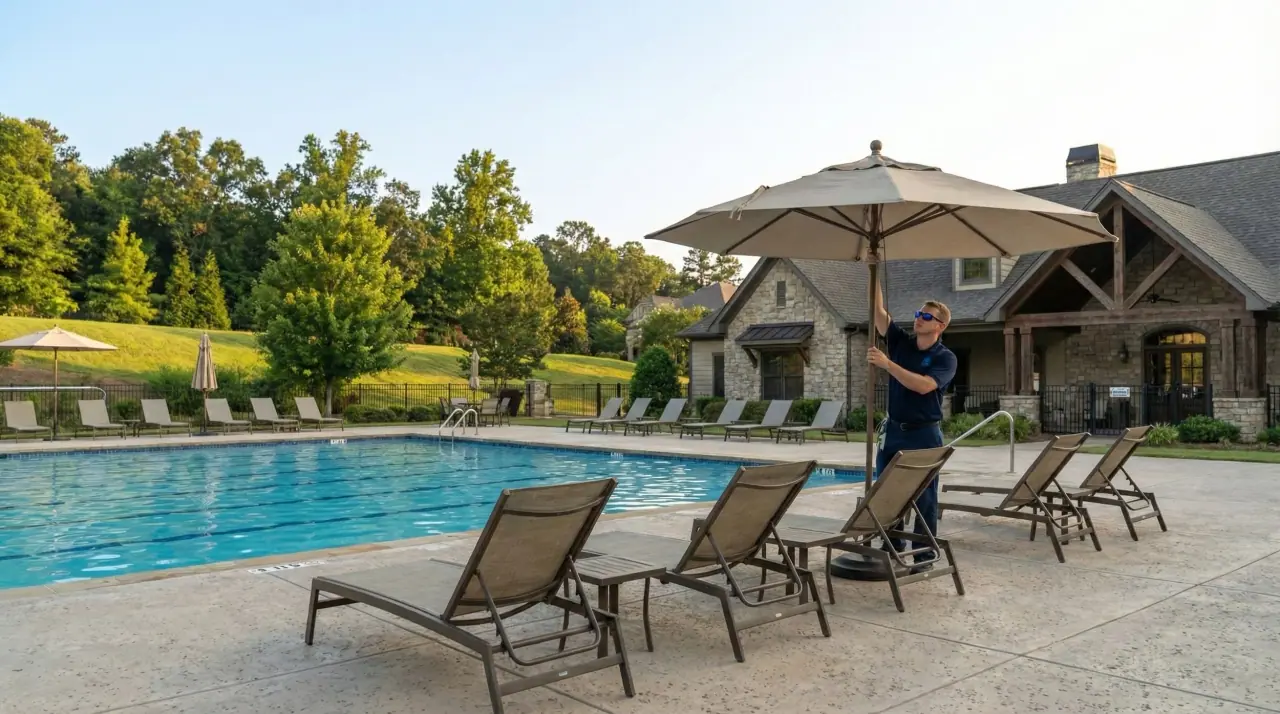
Pool attendant vs. lifeguard: what each one does and when you need which
A lifeguard and a pool attendant do different jobs. Here's what each role covers, what a board is actually buying, and how to decide which one your pool needs.

Boards mix these two roles up all the time, and it's easy to see why. Both people wear a uniform and both spend the day near the water. But they're hired for different jobs, they're trained for different things, and a contract for one doesn't cover the other.
Getting this straight matters before you write a budget or sign a proposal. The choice changes your staffing plan, the conversation you have with your insurance carrier and the signs you post at the gate.
What a lifeguard does
A lifeguard is a certified rescuer. The job is to watch the water, recognize a swimmer in trouble and get that person out. Certification comes from programs such as the American Red Cross or the YMCA and covers water rescue, CPR and first aid, with regular recertification. A guard on a stand is expected to keep eyes on an assigned zone of water and very little else.
That narrow focus is the whole point. A guard who is checking passes at the gate or settling an argument about a reserved table isn't scanning the water. Facilities that staff guards properly usually staff enough of them to rotate, so nobody watches the water for too long without a break.
What a pool attendant does
A pool attendant manages the pool as a place. The attendant checks residents in, applies the guest policy, enforces the posted rules and walks the deck on regular rounds. They open and close on schedule, keep the area tidy, report broken furniture or a gate that won't latch, and write down what happened during the shift. When something goes wrong, the attendant follows the post orders: call 911 if it's an emergency, contact the manager, and record what happened.
An attendant is not a lifeguard. The Pool Attendant Company staffs attendants. We don't provide lifeguards, and our attendants don't perform water rescues. That line belongs in every attendant proposal and every contract you sign.
What a board gets from an attendant is order at the pool. The right people get in, the rules are applied the same way every day, and there's a written record of each shift. Most of the complaints a manager hears about a community pool aren't about the water at all. They're about who got in, how many guests came with them, glass on the deck, loud music and the gate left propped open.
What a board is actually buying
When you hire guards, you're buying supervision of swimmers. When you hire attendants, you're buying access control, rule enforcement and documentation. Those are different services that answer different risks, and your insurance carrier and association attorney will treat them differently.
A few practical consequences follow from the choice:
- Signage. Many states require a "no lifeguard on duty" or "swim at your own risk" sign at pools without guards. If you staff attendants rather than guards, that sign usually stays up. Check your state and county rules before you take anything down.
- Resident expectations. People who see a staff member on the deck may assume that person is a lifeguard. Say plainly in your welcome letter, on the pool page of your community website and at the gate which role you've hired.
- Insurance. Ask your carrier how it views attendants compared with guards, and which certificates and limits it wants to see from the vendor.
- Contract language. The scope should name the role and list the duties. Vague wording like "pool supervision" invites the wrong assumption, and that assumption tends to surface at the worst possible moment.
When you need a lifeguard
Some pools need guards no matter what the board would prefer. State and local health codes set the rules, and they vary a lot. Pools with diving boards or slides, pools above a certain size and pools open to the public rather than residents are more likely to require guards. Florida's public pool rules are in Chapter 64E-9 of the Florida Administrative Code, and Texas covers public pools in Title 25, Chapter 265 of the Texas Administrative Code. The CDC's Model Aquatic Health Code is a useful plain-language reference, though it's voluntary unless your state has adopted parts of it.
Programming matters too. Swim team practice, swim lessons and big community events with lots of children in the water are moments when a guard belongs on the stand, even at a pool that doesn't otherwise need one. Plenty of communities that run on attendants bring in certified guards for those specific days.
If you're unsure, call your county health department and ask what your pool requires. It's a short call, and it's the answer your board will need anyway.
When an attendant is the right fit
Most HOA and condo pools in the six states we work in (Texas, Florida, Georgia, South Carolina, North Carolina and Colorado) are resident-only, have no diving board and aren't required by code to have guards. For those pools the daily problems are about access and conduct. Residents want to know that the person in the next chair actually lives there, that guest limits mean something, and that someone will deal with the group that brought a speaker and a cooler of bottles.
An attendant fits that work. They're at the gate when people arrive, they know who has a pass, and they walk the deck often enough that small problems get handled before they grow. At the end of the day the manager has a shift report instead of a pile of emails from residents.
Using both
Some communities staff both roles: guards on the water during peak hours and an attendant at the gate. This works well at large amenity centers, where a guard would otherwise get pulled away from the water to check passes. The attendant handles check-in and rules while the guard watches swimmers.
If you go this way, write separate post orders for each role so nobody assumes the other one has a task covered. Spell out who opens, who handles a guest dispute and who calls the manager when the gate breaks.
Questions to settle before you write the scope
- Does your state or county require lifeguards at your pool, given its features and who is allowed to use it?
- What does your insurance carrier expect for the role you plan to staff?
- Which duties have to be covered every hour the pool is open, and which only at peak times?
- How will you tell residents which role is on the deck?
- Who answers when a resident asks the attendant to do something outside the scope?
Write the answers down. They become the first page of your request for proposals, and they keep every vendor quoting the same job.
If an attendant fits your pool, request a free, itemized proposal. We'll list the hours, the duties and the things our attendants won't do, so your board knows exactly what it's signing.