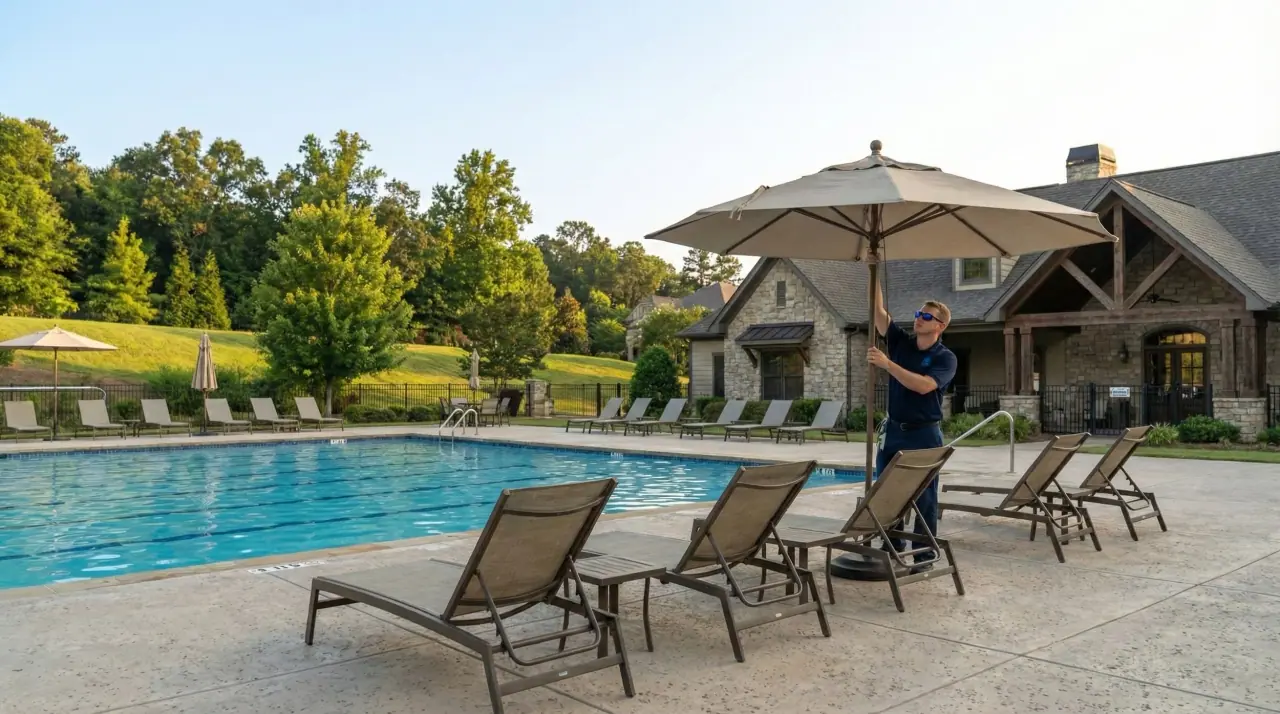
The signs every community pool should post
Some pool signs are required by your state health code and some are house rules the board chooses. Here's how to tell them apart, what each one should say and where to put it.

Walk up to most community pools and you'll find a fence covered in signs. Half of them are faded, and at least one is laminated printer paper zip-tied to the gate. Residents stop reading them, and the attendant ends up explaining rules that are technically posted but not really communicated.
Good signage does two jobs. It meets whatever your state and county require, and it tells residents the house rules before they reach the gate. Those are different kinds of signs, and treating them the same way is where most pools go wrong.
Code-required signs vs. house signs
Code-required signs come from your state health code and sometimes your county. They're about safety and health: depth markings, no diving in shallow water, emergency phone location, occupancy limits, and often a warning that no lifeguard is on duty. The wording, size and placement can be set by regulation, so don't freelance on these. If your pool is inspected, the inspector will check them.
House signs come from the board. Pool hours, guest limits, check-in rules, no glass, music rules and who to call with a problem are all house rules. You have far more freedom with these, which is exactly why they tend to multiply.
The two sets need different handling. Code-required signs get checked against the regulation and replaced when they fade. House signs get rewritten each winter along with the policies behind them, and old ones come down when the rule changes.
Finding out what your code requires
Each of the six states we work in sets its own pool rules, and requirements depend on the type of pool, its features and whether it's open to the public. Florida's rules are in Chapter 64E-9 of the Florida Administrative Code. Texas covers public pools in Title 25, Chapter 265 of the Texas Administrative Code. In Georgia, the Carolinas and Colorado, start with the state health department's pool page and then check with your county, since local programs often add their own requirements.
The CDC's Model Aquatic Health Code is a useful reference for what good signage covers, and the U.S. Consumer Product Safety Commission's Pool Safely campaign has material on safety barriers and drain covers. Neither replaces your local code. When in doubt, call the county health department or ask your pool service company, which deals with inspections every season.
The house signs most pools need
These are the signs we see work at community pools. Each one has a free, editable template you can download, add your community's name to and print.
Pool rules
One sign with the core rules, posted at the entrance and visible from the deck. Keep it short. Ten rules that people read beat thirty that nobody does. Lead with the rules that cause the most problems at your pool, such as no glass, guest limits and children's supervision. Use the pool rules sign template as a starting point and cut anything that doesn't apply.
Hours
Opening and closing times, plus any changes for weekdays, weekends and the shoulder season. If the pool closes for weather, say so here too. The pool hours sign has room for a weekday and weekend schedule.
Check-in
If residents check in with an attendant or a tablet, a sign at the gate saying so cuts down the "since when?" conversations. Include the guest limit. See the pool check-in sign.
Access
A sign stating that the pool is for residents and their accompanied guests, and how access works (fob, pass, check-in). This is the sign the attendant points to when someone without access tries the gate. Template: pool access sign.
No lifeguard on duty
If your pool doesn't staff lifeguards, your state may require a sign saying so, and it's good practice even where it isn't required. This matters at pools with attendants, because residents can mistake an attendant for a guard. Our attendants manage access, conduct and check-in; they aren't lifeguards, and the sign should stay up while they're on duty. Template: no lifeguard on duty sign. Check the required wording in your state code before you print.
Pool closed
A clear, sturdy sign for the gate when the pool is closed for maintenance, weather or the off-season, ideally with a line saying why and when it will reopen. A vague "closed" sign generates calls to the manager. Template: pool closed sign.
Guest passes
Not a sign, but it belongs in the same kit. If your guest policy uses passes, a printed pass that matches your signs looks official and is easy for the attendant to collect. Template: pool guest pass.
Placement and upkeep
Where a sign hangs matters as much as what it says.
- At the gate: access, check-in, hours and guest limits. People should read these before they're inside.
- Inside the gate, facing the deck: pool rules and the no-lifeguard notice, where they can be pointed to.
- Near the water: code-required depth and diving markings, placed exactly as your code requires.
- By the phone: the emergency instructions and the pool's street address, so a caller can give it to 911.
Signs fade fast in direct sun, especially in Texas and Florida. Print on weatherproof material, mount at eye level and walk the fence before opening day to replace anything faded or out of date. Remove old house signs when a rule changes. A pool with two different guest limits posted is asking for an argument at the gate.
Keep the signs and the policy in sync
The signs should match the rules in your governing documents and the post orders your attendants follow. When the board changes a rule in the winter, update the sign, the website and the welcome email at the same time. Attendants enforce what's posted, and residents believe what's posted. If the two disagree, everyone loses.
Browse all of our free pool signs and templates, or request a free, itemized proposal if you'd like attendants on the deck to back the signs up.